In the end, taking down wallpaper is the best way to get a durable, smooth finish, but if your wallpaper has been thoroughly glued down, is solid (not paper-backed), is not textured, and has an oil-based primer coat, painting over wallpaper is an option with Carlos Suscal Painting LLC.
How do I know if I should paint or remove wallpaper?
Before painting over a painted wall, check the seams for peeling or bubbling, determine the wallpaper type (don’t paint over vinyl or fabric wallcovering), test a small area with oil-based or shellac primer, apply wallpaper glue to restore small lifts at the seams, and use two coats of premium acrylic latex paint.
The Big Conundrum: Cover the Walls with Paint or Remove the Wallpaper?
If you are remodeling a room that still has its original wallpaper, then you’ve landed on the eternal question in renovation: spend the hours extracting the old paper or paint right over it.
Painting over wallpaper might seem easy until you realize you’ll have bubbles, ripping, and uneven texture after the paint dries. Before you choose the easier route, learn about the potential downsides of each for the best outcome.
Should I Paint Over Wallpaper?
Here is a list to help you decide whether you should just paint over it or remove it: Reasons to paint over wallpaper
1. The wallpaper is attached well.
2. You are trying to save time.
3. The wallpaper is flat.
4. The wallpaper is textured.
5. The wallpaper is a large pattern.
6. The wallpaper is in the bathroom.
7. You like the wallpaper.
8. The wallpaper is easy to peel.
9. You want to hide the wallpaper.
Reasons to remove wallpaper
1. The wallpaper is peeling or loose.
2. The wallpaper is damaged.
3. The wallpaper is old or outdated.
4. The wallpaper is hard to remove.
5. The wallpaper is in the kitchen.
6. You want a clean surface.
7. You want a fresh look.
Not all wallpapered walls are suitable candidates for painting over.
Assessing the existing paper’s condition and composition will help decide whether painting is an option.
1. Conditions Where Painting Over Wallpaper Works
You can paint over wallpaper under certain conditions that are closely followed.
● Complete sticking to the wall: The wallpaper must be completely attached to the wall, without lifting edges, air bubbles, and/or peeling seams.
● Non-Textured Materials: Plain paper wallpaper retains underpaint far better than heavily embossed, fabric, or foil-packaged patterns.
● Sanity-sized Drywall: Dismantling wallpaper could potentially tear and rip finely crafted plaster or unprimed drywall, so you’ll want to paint over the wallpaper to protect and save the drywall.
2. Situations That Demand Full Wallpaper Removal
Try to paint over inferior quality wallpaper, and the entire project will most likely fall apart.
● Peeling, Bubbling, or Damaged Paper: When the original paste begins to give, the water-based paint’s moisture content will deteriorate the adhesion, resulting in explosion on the entire surface.
● Vinyl/Metallic Wallcoverings: The non-porous nature of these surfaces will deflect water-based paints, resulting in pooling, cracking, and poor adhesion.
● High-Moisture Areas: The frequent change in humidity levels in your bathroom and kitchen over time can cause painted wallpaper to uplift and peel off.
Essential Prep Steps for Painting Over Wallpaper
If you opt for a new coat of paint over your wallpaper, make sure to prepare the surfaces to avoid moisture from damaging the glue.
3. Cleaning and Repairing the Surface
Paint will not stick to dust, grease, or lifting seams.
● Clean the Walls: Wash your wallpaper with a solution of weak detergent or trisodium phosphate (TSP) (diluted) to get rid of dust, oil, or any other dirt. Rinse with water and let dry.
● Secure Loose Seams: Use wallpaper seam adhesive on lifting wallpaper edges, press them to the wall with a seam roller, and allow the glue to dry.
● Seal & Smooth: Cover seam lines or tears with a thin layer of compound, sand smooth when dry, and dust off.
4. Priming and Painting Techniques
Painting Over Paper: The No. 1 Rule When Painting Over Paper: Choosing the Correct Primer.
● Use an Oil-Based or Shellac Primer: Don’t apply a water-based latex primer directly onto the wallpaper. Water saturates the paper and dissolves the adhesive beneath.
An oil-based primer or shellac primer containing a stain-blocking agent is used to cover the paper and stop bleeding of dye or pattern.
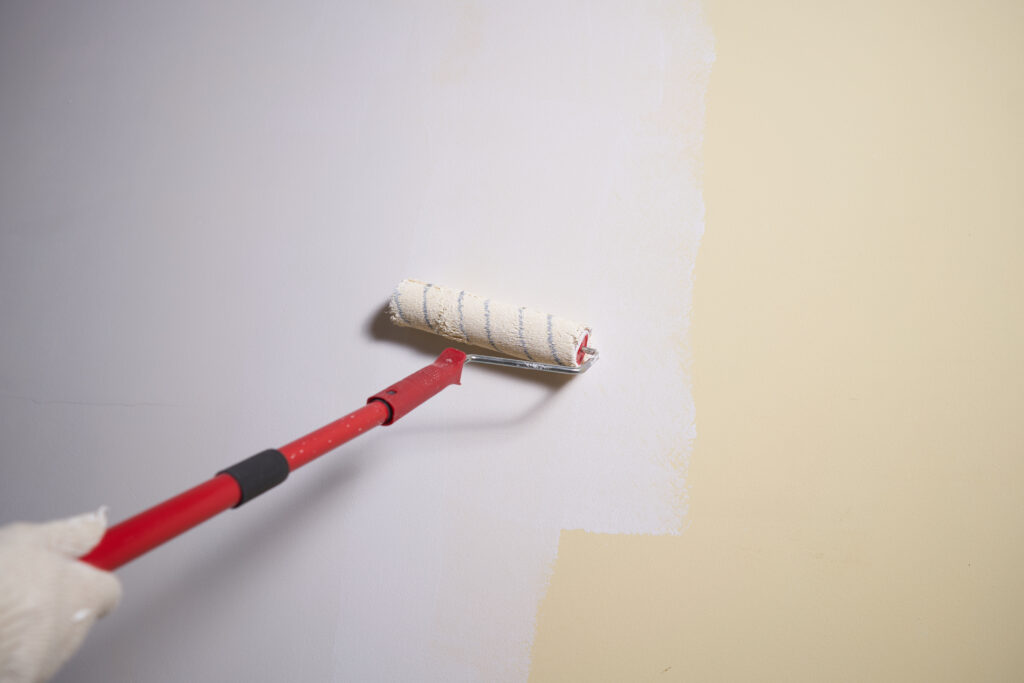
● Apply Acrylic Latex: Topcoats After the oil-based primer dries completely, apply two coats of high-quality acrylic latex wall paint in the sheen you desire.
How Come to Get Professionals for Painting & Wall Covering Practice?
Starting to remove wallpaper or cover wall coverings begins as a promptly messy and laborious undertaking.
● Safeguarding Drywall and Plaster: Expert paper hangers and painters employ steamers, scoring devices, and enzyme solutions to strip wall coverings while minimizing damage to the drywall or plaster beneath.
● Expert Primer & Prep: We test the wallpaper surface (vinyl, fabric, paper) and use industrial-grade stain-blocking primer for a smooth, bubble-and-peel-free application.
● Save Time & Avoid Frustration: Removing stubborn backing, residue, and patching your wall all by hand can take days. Hiring a professional to remove your wall system can take a fraction of the time and give you a factory finish.
Think About the Final Room Design
Before deciding how to handle the wallpaper, consider how the finished room should look and function. Paint color, trim, lighting, furniture, and the overall style can influence whether a painted surface will work better than keeping the existing wallcovering. If the project involves a larger interior update, professional painting services in Danbury, CT can help create a consistent finish that works with the rest of the room.
Conclusion
When to Paint Over vs. Remove Wallpaper: It all depends on the walls. Removing wallpaper offers a blank canvas and the best results over time, but if you like the wallpaper that’s on your walls and it’s smooth, firmly attached, and protected with an oil-based primer, covering it up is a quick and easy shortcut to new walls.
It’s worth prepping your walls carefully or hiring expert painters to achieve beautiful results that last for years to come.
FAQs
Can you use water-based primer over wallpaper?
No. Water-based primers soak into the wallpaper, reactivating the old adhesive and causing the paper to bubble, buckle, and peel off the wall.
How can I tell if my wallpaper is made of vinyl?
Wipe a wet sponge on a small corner. If the water beads up and does not soak in, or if you can easily peel off a clear plastic top layer, it is vinyl wallpaper.
Will paint hide wallpaper seams?
Not automatically. Paint highlights texture differences. To hide seams, apply a thin layer of joint compound over seam lines, sand it flat, and prime before painting.
Is it cheaper to paint over wallpaper or strip it?
Painting over wallpaper is cheaper upfront in terms of time and materials, but if it fails, fixing peeled or bubbled walls costs significantly more than stripping it initially.
How long does wallpaper removal take for a standard room?
For an average-sized room, professional wallpaper removal usually takes 1 to 2 days, including adhesive cleanup and minor drywall patching.